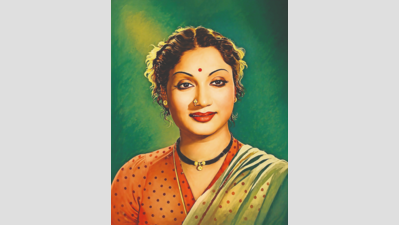
She didn’t just enter the frame—she disrupted it. G Varalakshmi, often described as the “rowdy actress” of Indian cinema’s golden era, didn’t conform to the demure, obedient archetype expected of women on screen in the 1940s and 1950s. Instead, she delivered performances laced with defiance, sensuality, and an almost punk-like rebellion against societal norms. Her characters were complex, often morally ambiguous, and always unforgettable. In an industry where female roles were largely decorative or tragic, she carved out space for fierce, independent women who spoke their minds—and sometimes, carried a knife.
The Making of a Rebel: Who Was G Varalakshmi?
Born in 1925 in Tamil Nadu, G Varalakshmi was not groomed for the silver screen in the traditional sense. Unlike many of her contemporaries who came from theatrical families or elite backgrounds, she rose from relative obscurity, driven by raw ambition and a refusal to be tamed. Her early life was marked by hardship, but also by a fierce intelligence and independence that would later define her screen persona.
She made her debut in the 1940 film Sathyaseelan, a Tamil historical drama. But it wasn’t until her role in Chandralekha (1948) that she gained national attention. Not the version most remember—S. S. Vasan’s lavish production starring M. S. Subbulakshmi—but the Tamil-Telugu bilingual film of the same name, where Varalakshmi played the scheming, seductive antagonist. It was a role that flipped the script: she wasn’t the virtuous heroine, but the woman who used her wit, sexuality, and ambition to challenge the status quo.
That character—unapologetically assertive, politically aware, and sexually autonomous—became her signature. In an era when actresses were expected to embody purity and sacrifice, G Varalakshmi played women who wanted power, love on their own terms, and freedom from patriarchal control.
Defying Convention: The “Rowdy” Persona
Calling G Varalakshmi “rowdy” wasn’t just a label thrown by critics uncomfortable with her energy—it was a badge of honor. In Tamil, rowdy doesn’t just mean “violent” or “disorderly.” It implies someone who refuses to play by the rules, who disrupts hierarchy, and who commands space through sheer force of presence. That’s exactly what she did.
Her performances in films like Velaikari (1949), Mangaiyar Thilakam (1955), and Kula Dheivam (1956) showcased women who weren’t waiting to be rescued. They stood up to landlords, challenged corrupt officials, and demanded justice for the oppressed. In Velaikari, she played a domestic worker who exposes exploitation—a role that resonated with working-class women and drew ire from conservative critics who called her “too bold.”
She didn’t just act—she provoked. Her dialogue delivery was sharp, her expressions loaded with subtext. She raised her voice when others whispered. She looked the camera—and the audience—dead in the eye, as if daring them to judge her.
This wasn’t just acting. It was activism through cinema.
A Feminist Ahead of Her Time?
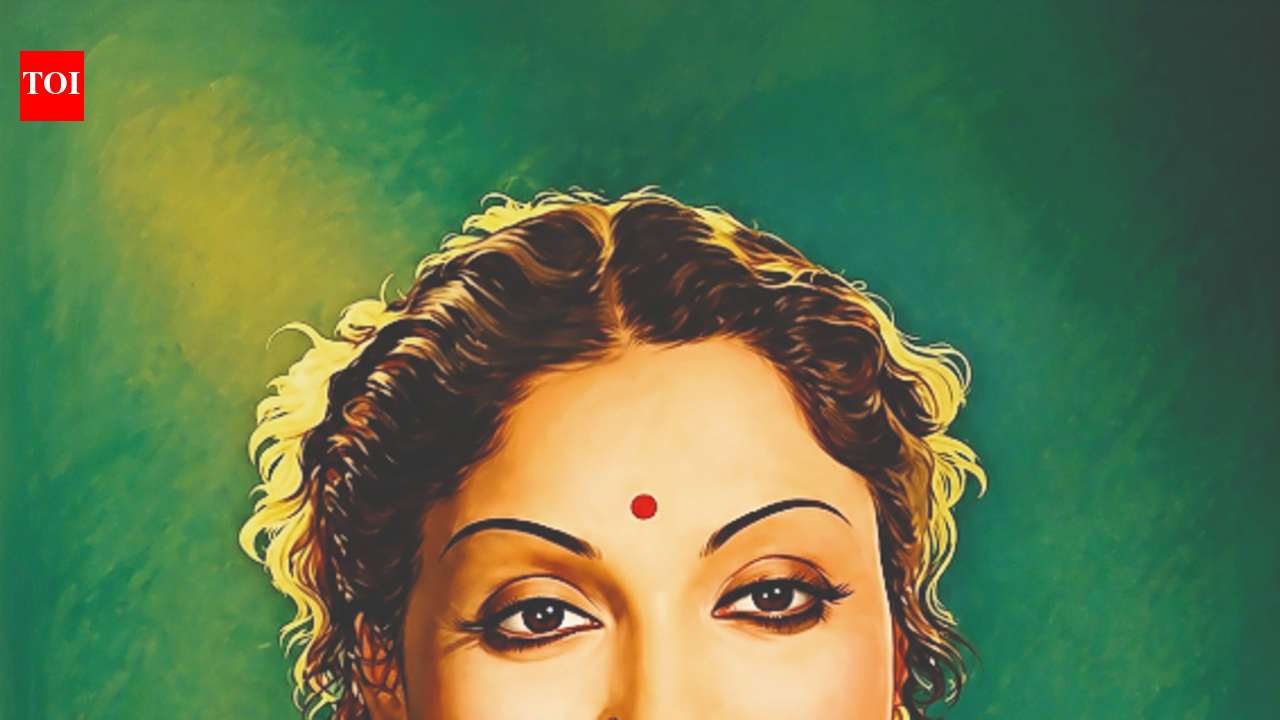
It’s tempting to label G Varalakshmi a feminist icon, but that risks simplifying her complexity. She wasn’t preaching ideology in interviews or writing manifestos. Her feminism was performative, lived through the roles she chose and the way she inhabited them.
Consider her portrayal in Penn (1953), where she plays a woman who leaves her husband to pursue independence. The film was controversial, not just for its theme, but for how Varalakshmi played it—without guilt, without apology. She didn’t weep dramatically or return at the end to beg forgiveness. She simply walked away.
Compare that to the typical female arc of the time: suffer in silence, forgive the man, die tragically. Varalakshmi’s characters rejected that trajectory. They made mistakes, yes, but they also made choices. And they owned them.
She wasn’t perfect—her characters weren’t meant to be. That was the point. She brought moral ambiguity to Indian cinema at a time when women were reduced to symbols of virtue or vice. She was both. And neither.
Stealing the Show: Memorable Performances
It wasn’t just the themes—her performances were electric. Directors knew that when G Varalakshmi entered a scene, the energy shifted. Here are a few standout roles that cemented her legacy:
- In Velaikari (1949): As a domestic worker fighting against caste and class oppression, her monologue on dignity and labor rights became iconic. Workers across Madras quoted her lines in protests.
- In Mangaiyar Thilakam (1955): She played a woman who rebuilds her life after betrayal, balancing vulnerability with steely resolve. The scene where she confronts her ex-lover without breaking down is a masterclass in restrained fury.
- In Kula Dheivam (1956): As a matriarch who defies tradition to protect her family, she blended maternal warmth with authoritarian strength—a rare combination for female characters of the era.
- In Penn Endral Penn (1957): A bold exploration of female desire, where she played a widow who falls in love again. The film was banned in several districts, but her performance was widely praised for its emotional honesty.
These weren’t supporting roles. They were center stage—and she owned them.
The Price of Rebellion
Success came with consequences. G Varalakshmi’s defiance wasn’t just celebrated—it was policed. Conservative critics labeled her “vulgar,” “dangerous,” and “a bad influence.” Some producers hesitated to cast her, fearing backlash. Even within the industry, she faced resistance from male co-stars who weren’t used to sharing screen space with someone so dominant.
She was also denied opportunities that went to “softer” actresses. While others were cast as goddesses and queens, she was often typecast as the “troubled woman” or the “fallen heroine.” But even within those constraints, she subverted expectations. Her “fallen” women weren’t pitied—they were powerful, calculating, and often the moral center of the story.
She never married, a rarity for actresses of her time. When asked about it, she reportedly said, “Why should I fit into someone else’s life when I’ve built my own?”
Why She Matters Today
In the age of #MeToo and rising feminist discourse in Indian cinema, G Varalakshmi’s legacy feels more relevant than ever. She didn’t wait for permission to be strong. She didn’t soften her edges to be likable. She was unapologetically ambitious, emotionally complex, and politically aware.

Modern actresses like Nayanthara, Aishwarya Rajesh, and Keerthy Suresh echo her spirit—not in imitation, but in shared DNA. They play women who lead, who fight, who desire, and who refuse to be silenced. That lineage traces back, in part, to Varalakshmi.
But her story also serves as a cautionary tale. How many rebellious voices get erased from history because they don’t fit the “respectable” mold? G Varalakshmi isn’t as widely remembered as some of her contemporaries. She’s absent from many mainstream retrospectives. Her films are rarely restored or re-released.
Rediscovering her isn’t just about nostalgia—it’s about correcting the record.
The Art of Stealing the Show
What can today’s performers learn from G Varalakshmi?
- Own your presence: She never shrank. Even in ensemble casts, she commanded attention through posture, voice, and stillness.
- Embrace complexity: She didn’t try to make her characters “likable.” She made them real.
- Use silence as power: Some of her most impactful moments were wordless—the glance, the pause, the slow turn of the head.
- Challenge the script: She reportedly rewrote lines to make them sharper, more authentic. Actors today can learn to advocate for their characters.
- Stay independent: She managed her own career, avoided studio traps, and refused to be typecast forever.
She wasn’t just acting. She was rewriting the rules.
Final Frame: A Legacy Unfinished
G Varalakshmi’s filmography slowed in the 1960s as new genres and stars emerged. But her influence never faded—it evolved. She proved that a woman could be the heart of a film without being passive. She could be angry, sexual, ambitious, and still the audience’s ally.
To call her the “rowdy actress” isn’t dismissive—it’s accurate. She was rowdy in the best sense: disruptive, fearless, and impossible to ignore. She didn’t just steal the show. She changed what the show could be.
If you’re looking for perfection, look elsewhere. But if you want truth, fire, and a woman who lived by her own code—watch G Varalakshmi. Let her teach you how to take up space.
FAQ
What does “rowdy actress” mean in reference to G Varalakshmi? It refers to her defiant, rebellious screen presence—she played strong-willed, unconventional women who challenged norms, not the traditional passive heroines.
Which was G Varalakshmi’s most controversial film? Penn Endral Penn (1957), for its portrayal of a widow’s romantic life, was banned in several regions due to its bold themes.
Did G Varalakshmi win any major awards? She didn’t receive national awards, as they weren’t prominent in her era, but she was critically acclaimed and widely respected by peers.
Why isn’t G Varalakshmi as famous today? Many of her films aren’t digitally preserved, and mainstream narratives often favor “respectable” female icons over rebellious ones.
Was G Varalakshmi a feminist? She never used the term, but her roles embodied feminist ideals—autonomy, resistance, and emotional independence.
How many films did G Varalakshmi act in? She appeared in over 100 films across Tamil and Telugu cinema during the 1940s–1960s.
Is there a biography or documentary on her? No official biography exists, and no full-length documentary has been made—though film scholars frequently reference her work.
FAQ
What should you look for in G Varalakshmi: The Rowdy Actress Who Defied Convention? Focus on relevance, practical value, and how well the solution matches real user intent.
Is G Varalakshmi: The Rowdy Actress Who Defied Convention suitable for beginners? That depends on the workflow, but a clear step-by-step approach usually makes it easier to start.
How do you compare options around G Varalakshmi: The Rowdy Actress Who Defied Convention? Compare features, trust signals, limitations, pricing, and ease of implementation.
What mistakes should you avoid? Avoid generic choices, weak validation, and decisions based only on marketing claims.
What is the next best step? Shortlist the most relevant options, validate them quickly, and refine from real-world results.